Why Every Hotel Room Has a „Good Side” (and How to Find It)
Hotel Photography
Every hotel room has a perfect angle — and the right photographer knows how to capture the side that truly sells the experience.
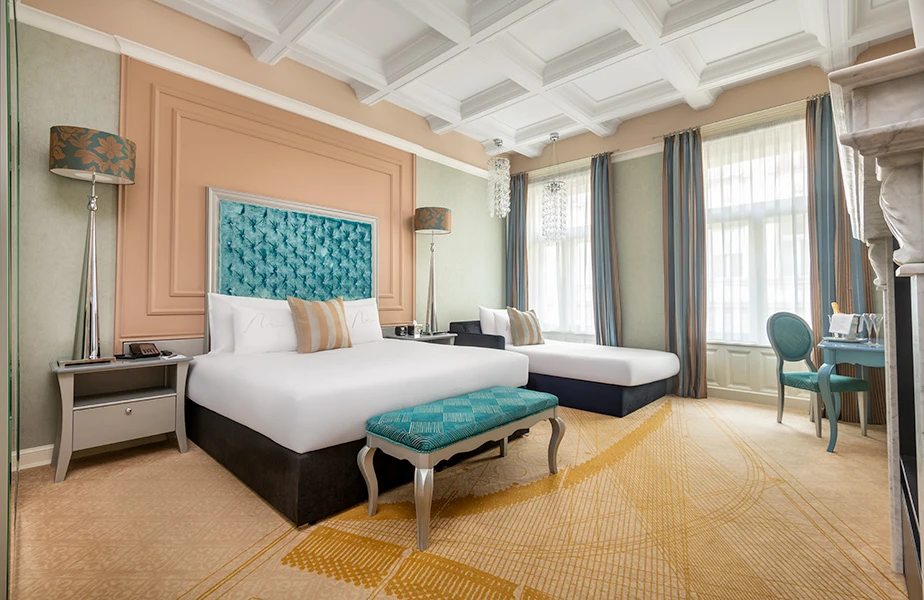
Every hotel room features one — that perfect angle where everything comes together, which I call the sweet spot. The light feels warmer, the design flows seamlessly, and everything is exactly where it needs to be; the space appears exactly as it was meant to be. Discovering that „good side” isn’t luck; it’s a deliberate process that sets great hotel photography apart from forgettable images.
The Myth of Symmetry
Many believe the ideal photo is taken from the centre of the room, directly facing the bed. It’s a common mistake. Real spaces rarely look their best from symmetrical angles, and this is before considering the distortions caused by ultra-wide lenses. Hotel rooms have asymmetries — differences in lighting, focal points, and reflections — which require awareness. The goal isn’t just to document the space; it’s to interpret it.
Understanding the Light
Light is the primary indicator of a room’s character. Morning sunlight might create a warm, inviting atmosphere, while evening light can make the same room feel luxurious and intimate. It’s essential to blend artificial and natural light seamlessly, so the viewer can’t even detect the transition. A professional photographer reads the room like a map — pinpointing where natural light falls, how it interacts with textures, and when it best enhances the space.
Working with the Room, Not Against It
The „good side” often becomes apparent when you pay attention to the intended design. Perhaps the interior designer wanted guests to notice a view framed by the curtains, or how the headboard aligns with artwork. The correct perspective respects that vision while adding depth and emotional resonance.
Details Define Character
Every object in a hotel room — from a bedside lamp to the curve of a chair — contributes to its character. Finding the good side involves arranging and refining these details without making it appear staged. Small adjustments can transform a good composition into one that feels natural and editorial.
The Photographer's Instinct
After years of photographing hotels across Europe and Asia, I’ve learned that each space has a ‘sweet spot’ visually. It might take a few tests, a slight shift in camera height, or a change of lens, but once you find it, the room feels alive. Guests don’t just see a photo — they experience what it’s like to stay there.
Conclusion
Each hotel room has a story, but it can only be told from its best side. Professional photography involves finding that angle — where design, light, and emotion converge to create images that invite, inspire, and sell.